About the Laboratory
International Laboratory for Population and Health develops new methods for modelling and decomposing differences and changes of major health indexes in human populations. We conduct studies for unrevealing the Russian mortality enigma. We address components and factors of excess mortality at working ages and among the elderly. We are interested in health and quality of life in aging populations and in the impact of socioeconomic inequalities on people’s survival and health.


Studying fertility in Russia through a birth cohort: a bayesian approach and regional specifics
On September 24, 2026, the International Laboratory for Population and Health at HSE University held a research seminar entitled «Studying fertility in Russia through a birth cohort: a bayesian approach and regional specifics». Pavel Kishenin, a Research Intern and PhD student at the International Laboratory for Population and Health, presented the results of his dissertation research.

Realisation of Reproductive Intentions: Causes and Consequences of Changes in Timing
On September 3, at the first academic seminar of the new academic year held by the International Laboratory for Population and Health at the HSE, Olga Rodina, a graduate student and research assistant at the laboratory, presented updated findings from her Ph.D. dissertation, “Realisation of Reproductive Intentions: Causes and Consequences of Changes in Timing”. The work had already been discussed with reviewers during a preliminary review session in the spring. The September seminar focused on new findings obtained over the summer.

Russian Censuses: Differences between Soviet and Modern Censuses
On May 21, 2026, the International Laboratory for Population and Health held a seminar on “Russian Censuses: Differences between Soviet and Modern Censuses”. Evgeny Andreev, academic supervisor of the laboratory, presented a lecture on history and methodological features of censuses in Russia.

Realization of Reproductive Intentions: Causes and Consequences of Timing Changes
On May 20, a preliminary discussion of the PhD dissertation by Olga Rodina, a PhD-student and research intern at the International Laboratory for Population and Health, took place. Her dissertation is titled “Realization of Reproductive Intentions: Causes and Consequences of Timing Changes.”



Evolution of Fertility in Russia: A Birth Cohort Perspective
On April 23, the International Laboratory for Population and Health Research at HSE University held its regular scientific seminar. Pavel Kishenin, a Research Intern at the laboratory, presented a report titled "Evolution of Fertility in Russia by Mother’s Age and Birth Order: A Birth Cohort Lens."
Conference: “The Second Demographic Readings in Memory of Anatoly Vishnevsky: The Theory of Demographic Transition and the Future of the Population of Russia and the World”
On November 12–13, 2025, the HSE University hosted the conference “The Second Demographic Readings in Memory of Anatoly Vishnevsky: The Theory of Demographic Transition and the Future of the Population of Russia and the World,” timed to coincide with the 90th birthday of the outstanding Russian demographer Anatoly Vishnevsky.
Demographic trends and projections of morbidity and mortality from cancer
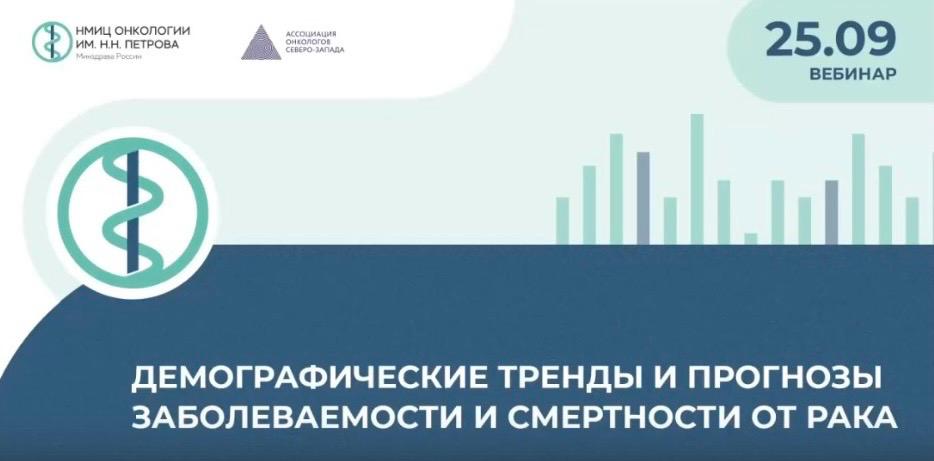
On 25 September 2025, the National Medical Research Center of Oncology named after N.N. Petrov of the Ministry of Health of the Russian Federation held a webinar on "Demographic trends and projections of morbidity and mortality from cancer".
The Place of the Hypothetical Generation in Modern Demography
On October 2, 2025, the International Laboratory for Population and Health held a seminar on "The Place of the Hypothetical Generation in Modern Demography."
Evgeny Andreev, head of the laboratory, presented a lecture on the history, advantages, and challenges of calculating demographic indicators using hypothetical generations.

Researchers from the HSE International Laboratory for Population and Health presented their research results at the International Population Conference IPC2025 in Brisbane, Australia
From 13 to 18 July, the XXX International Population Conference (IPC2025) was held in Brisbane, Australia, organised by the International Union for the Study of Population (IUSSP) in conjunction with the Australian National University. The conference is held every four years and is considered one of the key events in global demographic science.
Who Counts as a Migrant? The Impact of Definitions on Mortality Estimates in Belgium
On June 24, 2025, the International Laboratory for Population and Health held a seminar titled: “Who Counts as a Migrant? Comparing Definitions and Their Impact on Mortality Estimates in Belgium.”